
Geauga ICE Release Paths
The Geauga County Safety Center appears in ICE's detention-facility index and inspection archive. That federal function exists at the same Merritt Road building used for local county custody. The shared site does not create one shared release record. GCSO documents a person's admission to and departure from county custody. ICE's Online Detainee Locator System, Enforcement and Removal Operations contacts, immigration case material, and agency records address the immigration segment.
A county departure can lead to several outcomes. GCSO may release a person to ICE under a detainer. ICE may later transfer that person to another detention site, release the person from ICE custody, or carry out another lawful disposition. A local court order can end the criminal hold while the immigration hold remains. The phrase “released from Geauga” must always carry the releasing authority and destination.
| Event | Meaning | Primary confirmation |
|---|---|---|
| GCSO to ICE | County custody ended, but federal immigration custody began or continued. | Safety Center release/transfer entry, then ODLS |
| ICE facility transfer | The detainee moved within the ICE system. | ODLS and ERO |
| Release from ICE custody | ICE reports the qualifying person as released during its recent window. | ODLS, with agency confirmation when needed |
| No ODLS result | The search did not resolve a covered record. | Recheck identity and use ERO or records channels |
Search Geauga ICE Release Records
The ICE Online Detainee Locator System, known as ODLS, is the first federal lookup for a specific person. It offers two search methods. The stronger route uses the nine-digit alien registration number, called an A-number, plus country of birth. A shorter A-number must be padded with leading zeros. The other route uses exact name, date of birth, and country of birth. Exact spelling matters.
Use the locator soon after a Geauga transfer or possible ICE release. ICE states that ODLS covers qualifying people currently detained and qualifying people released from ICE custody within the last 60 days. It is not a permanent historical release archive.
- Get the A-number from a reliable record if possible and confirm the country of birth.
- Search the A-number route first. If it is unavailable, enter exact identity fields.
- Read the reported custody or release result without changing its agency label.
- Save the date of the check because ICE status and locator coverage can change.
- Compare the result with the GCSO release or transfer entry and the applicable court record.
The official ICE locator limitations are shown in this captured source.
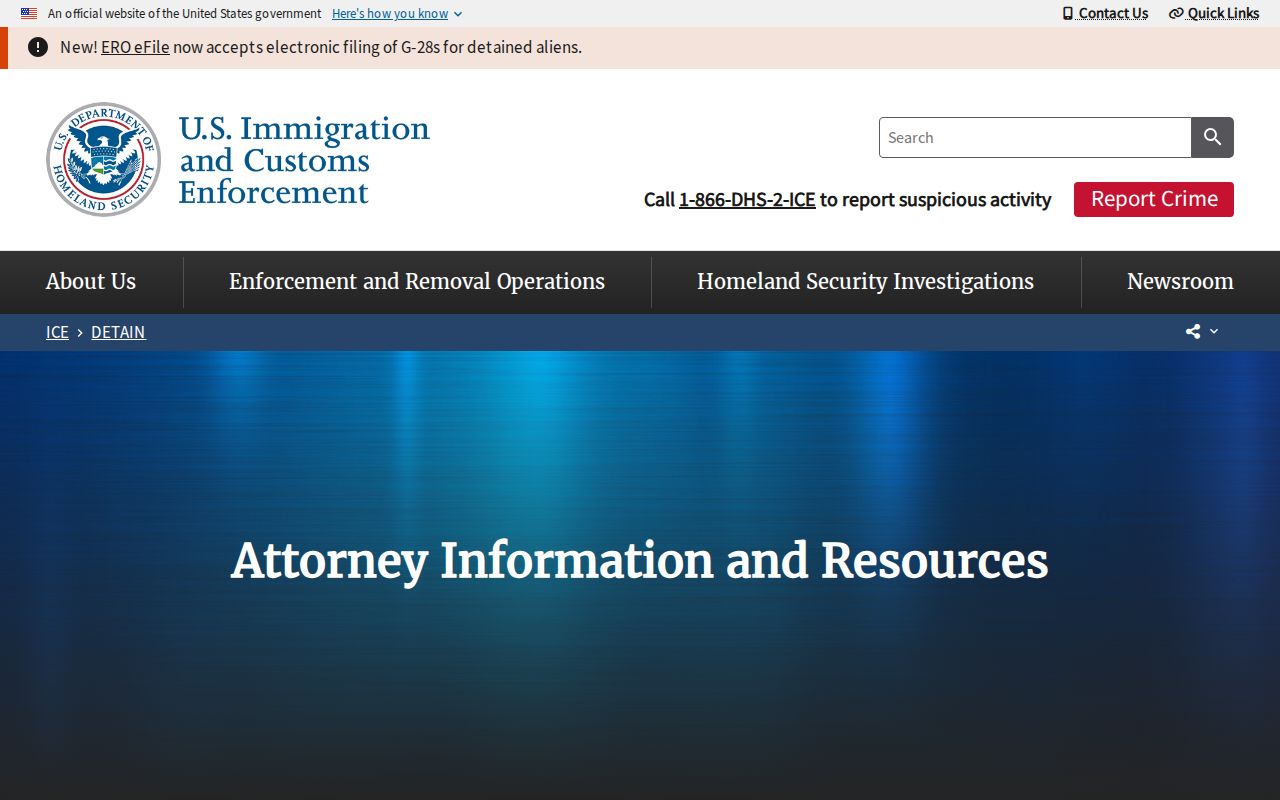
The limitations place every ODLS match and no-match within a defined, recent reporting window.
Geauga ICE 60-Day Window
The 60-day rule is easy to misread. It means a qualifying record may remain searchable for up to the stated period after release from ICE custody. It does not mean the person was held for 60 days, and it does not create a county release-list window. Once the recent period passes, an absent result cannot establish that the person was never in ICE custody.
ODLS can also omit minors. Records may be withheld for safety, security, or agency reasons, and data may lag. A no-hit can reflect a name mismatch, an incomplete A-number, a processing delay, a suppressed record, an agency transfer, removal, or aging beyond the locator period. Repeat the search with corrected stable identifiers before drawing any conclusion.
A written note should state only what occurred: “No match appeared in ODLS on the check date using these fields.” The note should also preserve the 60-day coverage limit. That phrasing is far more accurate than translating a no-hit into a claim about present location.
Geauga ICE Detainer Releases
ICE defines an immigration detainer as a request to a law-enforcement agency. It asks the agency to notify ICE before release and to keep custody for up to 48 hours beyond the point when the criminal authority would otherwise release the person. The added time permits the Department of Homeland Security to assume custody. The period is tied to the detainer process, not a new local sentence.
This distinction is central at the Safety Center. A bond may be posted or a criminal case may reach a release point, yet the person may not walk out. The jail must also receive controlling court paperwork before it acts, and processing duration can vary. If a detainer applies, the county booking record may then show release to ICE. That entry closes the GCSO segment while federal custody continues.
ICE's detainer information supplies the transfer rule shown below.
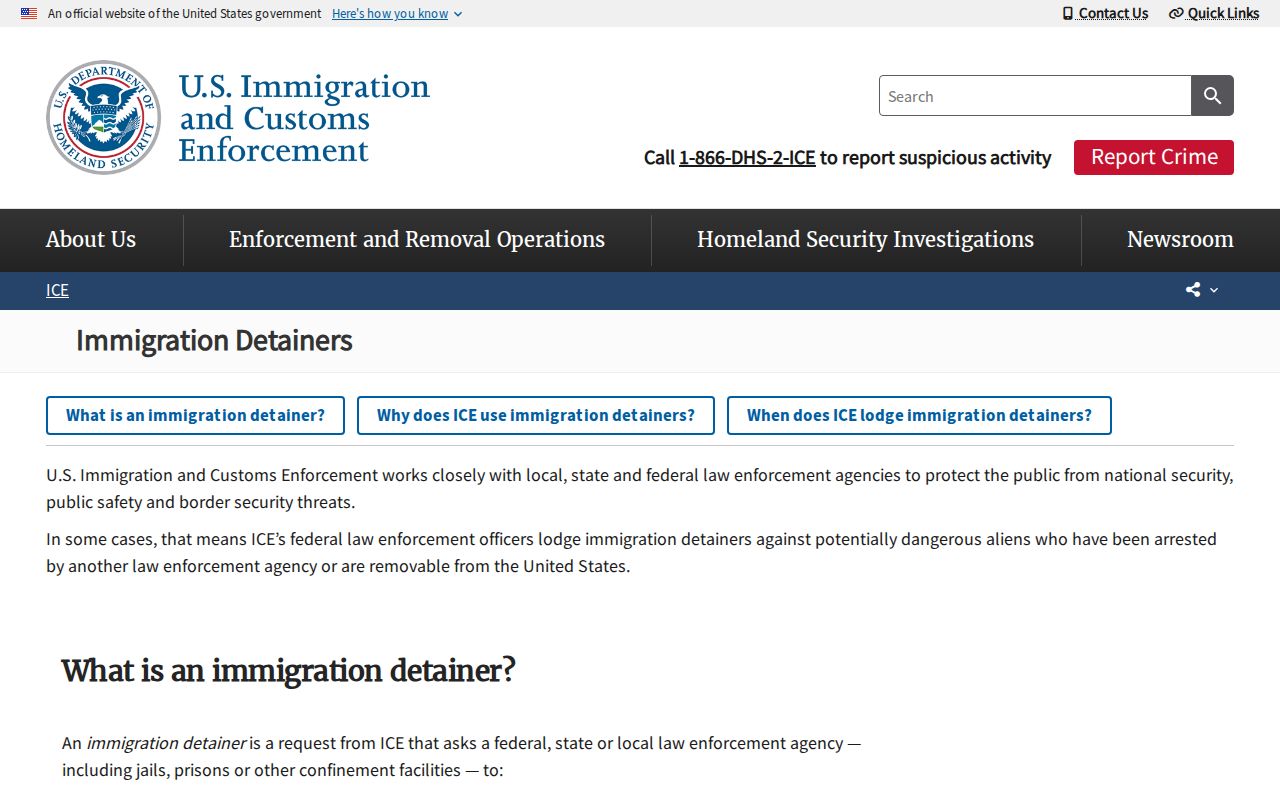
The captured explanation supports reading “released to ICE” as transfer language, not as proof of a community exit.
Ask GCSO for the public release type, destination, and timestamp. Then use ODLS. If ICE custody is confirmed but the locator does not supply enough information, contact the proper ERO field office. The local criminal docket can explain why the county hold ended, but it cannot by itself prove what ICE did next.
Geauga ICE Inspection History
ICE's Office of Detention Oversight completed a follow-up inspection at the Geauga facility in July 2024. The official inspection says Enforcement and Removal Operations began holding detainees there in 2003 under an intergovernmental agreement associated with the U.S. Marshals Service. It describes male and female detainees across low, medium, and high classifications and detention lasting more than 72 hours.
Those points establish facility function and history. They do not disclose the status of any named person. The “more than 72 hours” language describes a class of detention at the facility. It must not be confused with a rolling 72-hour list of people released by GCSO. No official Geauga 72-hour release feed was found in the reviewed county channels.
Dated local reporting from January 27, 2025 also described ICE detainees held at the jail. That account illustrates the continuing local-federal interface, but the report is not an individual locator and should never substitute for ODLS, GCSO records, or an immigration case source.
Geauga ICE Release Contacts
The Safety Center contact handles the county record. Ask for public portions of the jail-register entry and booking file, limited to admission, release, transfer, authority, and destination fields. The local record can show when GCSO's custody ended. It does not become a complete ICE discharge file just because the same building housed the person.
Geauga County Safety Center12450 Merritt Road
Chardon, OH 44024
GCSO records: 440-279-2009, option 4
Corrections: extension 4411
Fax: 440-286-3251
Hours: Verify current counter hours with GCSO
Submit the request through the official GCSO form. Include the booking number, case number, and narrow date range when known. Ohio law does not set one universal response deadline, and no verified sheriff copy fee appeared in the reviewed source. Ask for electronic copies and confirm any cost before ordering.
For the federal segment, ODLS is the live/recent locator. ERO can address current case routing when the locator cannot. An ICE records request is the historical path for a specifically described agency record, subject to applicable limits and redactions. The main Safety Center release page explains the county-side booking record in more detail.
Verify Geauga ICE Release Status
Three sources may mark three different moments. A court order marks legal action in the local criminal case. The GCSO jail register marks the recorded end of county custody. ODLS reports a qualifying current or recently released ICE record within its stated scope. None should be forced to answer the other source's question.
- Detainer
- An ICE request for notice and up to 48 additional hours of local custody so DHS can assume custody.
- Transfer
- A move from one authority or facility to another, not a community release.
- ICE release
- The end of the ICE custody segment as reported by that agency.
- A-number
- A federal alien registration number used with country of birth in ODLS.
For a firm chronology, preserve each timestamp and label. Start with the county entry, check ODLS at once, and record when the search occurred. If the two systems do not align, ask the record owners to reconcile their own fields. The broader Geauga County release search shows how ODRC, BOP, USMS, local courts, and VINE fit alongside this immigration path.
Note: Release from one authority can be followed at once by custody under another, so every result needs its agency name and check date.